BANDF AD
AI/ML
VAST broadens AI platform push with Nvidia tie-up and control plane
VAST Data has announced new self-learning AI OS software, Nvidia GPU-server hardware support, integrated CrowdStrike cybersecurity, a Polaris fleet management control plane, and a Cosmos partner program at its Forward customer conference.
The rapidly maturing company is becoming an incumbent, spreading its wings wider across a larger ecosystem of partners while still extending its AI OS software and deepening its integration with Nvidia. It's left its startup status far behind.
BANDF AD
Renen Hallak, founder and CEO of VAST Data, said: "Ten years ago, we set out to build a system that could continuously refine data into intelligence and action. That future is here."
A diagram shows the breadth of its Forward conference news:

The core news items are the AI OS software enhancements and the Nvidia GPU server integration with the CNode-X configuration as both help to make AI applications run faster and better across fleets of VAST Data systems. Let's start with the hardware and then go up stack.
CNode-X
BANDF AD
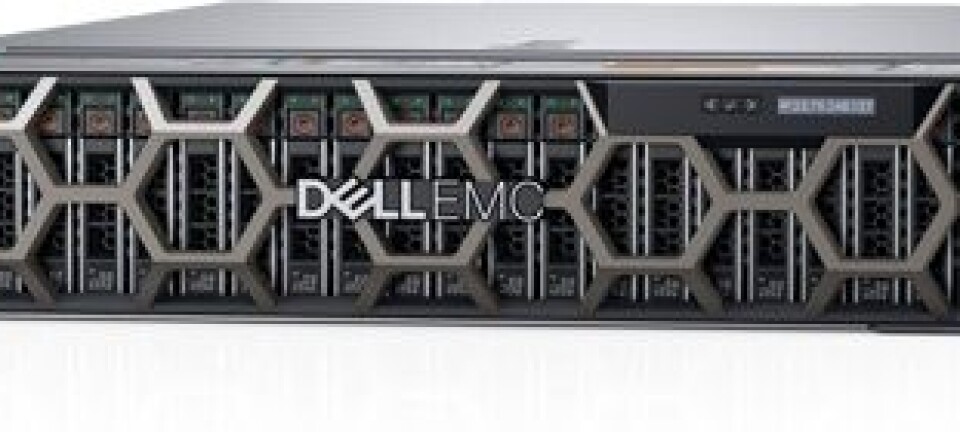
The CNode-X was designed in collaboration with Nvidia and is VAST's AI OS software running on Nvidia's GPU servers. VAST says this architectural shift enables AI OS to orchestrate AI pipelines, high-performance analytics, vector search, RAG functions, and agent runtimes in a single, unified software stack.
Hallak said: "By accelerating both compute and the data paths inside the VAST AI OS with Nvidia, we're giving customers a faster, simpler way to operationalize retrieval, analytics, and agentic workflows as one coherent pipeline so AI can move from pilot to durable, production systems."
CNode-X software features:
- Sirius open-source query engine based on Nvidia cuDF, for GPU-accelerated SQL execution at the compute layer. The cuDF library accelerates structured data analytics. Early benchmarking of Sirius shows up to a 44 percent reduction in query time and up to an 80 percent reduction in query cost.
- Embedded Nvidia cuVS brings GPU acceleration to vector search and data clustering for scalable vector database services, and to VAST's InsightEngine operating RAG pipelines, meaning lower retrieval latency.
- VAST will deploy and support NIM microservices across CNode-X and is open-sourcing production-ready VAST DataEngine blueprints for AI pipelines targeting video intelligence, enterprise document RAG, and genomics research use-cases.
- Support for Nvidia's Context Memory Storage (CMX) Platform with cluster configurations that support BlueField-4 DPUs and Spectrum-X Ethernet networking to accelerate access to shared KV cache and lower time-to-first-token for long-context, multi-agent inference, giving AI agents access to memory across the entire pod.
- Optional addition of enterprise data services out-of-band without extending KV retrieval time.
BANDF AD
CNode-X servers will be produced as certified configurations by VAST hardware partners such as Cisco and Supermicro, and possibly HPE and Lenovo. In effect, these configs will be similar to hyperconverged systems (HCI).
AI OS
VAST's AI OS gets two new software engines – a PolicyEngine and a TuningEngine – both working with the existing DataEngine, which provides automated pipeline operations to make AI faster.
The PolicyEngine governs agents' access to shared memory, external tools, knowledge bases, or other agents by permitting access, actions, and communications according to fine-grained, explicit permissions, as well as AI-derived context. The system maintains a zero trust operating posture, with enforcement before actions execute, and tamper-proof traces and logs.
BANDF AD
The TuningEngine captures outcomes from agentic pipelines and utilizes curated feedback to enhance model performance over time. TuningEngine pipelines automatically ingest data produced by LoRA fine tuning, supervised fine tuning, and reinforcement learning, processes it, and suggests new candidate models. Each new candidate can be evaluated and benchmarked within AI OS, and then manually or automatically deployed into the platform.
VAST says that these new capabilities represent a massive step toward building systems that automatically evolve as they interact with data from the natural world.
Jeff Denworth, co-founder at VAST Data, said: "With the introduction of PolicyEngine and TuningEngine, the VAST AI OS has become a thinking machine that customers can deploy wherever they compute – a machine that safeguards every interaction and learns from every outcome, bringing the power of AI within reach of every organization."
AI OS and CrowdStrike
CrowdStrike is a recognized and widely user cybersecurity platform that can detect malware attacks and activate responses. VAST is integrating CrowdStrike features into its AI OS and integrating them with its PolicyEngine, using joint connectors and event-driven automation.
The AI OS continuously monitors data access, administrative activity, and workload behavior. These signals are correlated with CrowdStrike's endpoint, identity, and threat intelligence data to enable real-time detection. When risk is identified, CrowdStrike can trigger secure API actions within VAST to quarantine data, restrict access, isolate workloads, and preserve forensic records. This targeted response minimizes disruption and contain threats.
VAST also powers components of CrowdStrike's operational infrastructure, including threat detection pipelines and analytics environments. It and CrowdStrike will provide standardized APIs, open connectors, and reference architectures, enabling customers and partners to deploy and extend secure AI environments.
George Kurtz, co-founder and CEO of CrowdStrike, said: "By integrating CrowdStrike's threat intelligence and automated response capabilities with VAST's AI and data platform, we are extending protection to where enterprise value is created. This partnership delivers real-time, data-layer security that helps organizations stop breaches and securely innovate with AI."
Polaris control plane
Customers can now manage geo-distributed fleets of VAST systems located on-premises, in neocloud datacenters and in the public clouds using a Polaris control plane. It is a centralized service delivery layer automating deployment, lifecycle management and multi-cluster orchestration. This converts a collection of separate VAST deployments into a single operational platform. Polaris abstracts VAST infrastructure location, allowing applications and agents to operate against a single logical environment regardless of where compute or data resides.
Jonsi Stefansson, General Manager, Cloud Solutions at VAST Data, said: "Polaris establishes a global control plane that makes distributed AI infrastructure operationally coherent. It allows enterprises to deploy, scale and govern VAST clusters on any cloud or on-premises, all while managing them as one system."
Polaris is implemented as a secure, multi-tenant Kubernetes-based control plane with a lightweight agent on every VAST node. It automates provisioning in customer accounts, integrates with cloud marketplaces for subscription and entitlement, and centrally orchestrates upgrades, expansion and node replacement. Polaris includes enterprise identity integration, role-based access control and audit logging, delivering cloud-style operational consistency.
Polaris supports multi-site, multi-cluster deployments under centralized management, and can be VAST-managed, partner-managed, or customer-managed and supports cloud service provider partners, as well as sovereign deployments. VAST deployments can be created, expanded and governed through a single API and interface, ensuring consistent configuration, policy enforcement and operational behavior across regions and providers.
Cosmos partner program
VAST has implemented Cosmos, a unified partner program for its resellers, service providers, systems integrators and advisory partners, technology alliance partners, distributors, cloud service providers and hyperscalers. Cosmos formalizes how partners can participate in one or more routes to market while aligning around common training, enablement, governance, and go-to-market resources through a centralized partner portal.
There are several partner-type tracks:
- Technology Partners, which include Software Partners (ISVs), Hardware / Platform Partners (compute, GPU, networking, systems).
- Cloud Partners – Hyperscalers and Cloud Service Providers (CSPs).
- Value Added Resellers and Solution Integrator Partners, which include Resellers and GSIs, Consulting and Services Partners and Authorized Services Partners.
- Developer Community.
John Mao, VP Global Technology Alliances at VAST Data, said: "We're... giving technology, cloud, and channel partners a unified framework to build and validate solutions, differentiate service offerings, and bring the VAST AI Operating System to customers – across the datacenter, cloud, and at the edge."
Mirantis has been selected as an inaugural technology partner in the Cosmos partner program. It will collaborate with VAST to establish a standardized integration path for VAST technologies within the Mirantis k0rdent AI Kubernetes-native ecosystem. Mirantis says that by combining k0rdent's flexible, scalable Kubernetes multi-cluster platform engineering and operations framework with VAST AI OS, neoclouds will be able to reduce integration friction and accelerate high-performance inference and AI services delivery.
South Korean AI Infrastructure company Lablup has joined Cosmos as a Technology Alliance Partner to help customers accelerate AI training and inference workloads through a validated integration between its Backend.AI and the VAST AI OS. The collaboration will enable customers to orchestrate end-to-end AI workloads, from training to deployment and inference, with high-throughput access to training datasets and model artifacts through RDMA and GPUDirect data paths powered by VAST DataStore.
Lablup and VAST Data are collaborating on infrastructure for South Korea's Sovereign AI foundation model initiatives.
VAST and TwelveLabs
VAST has signed a partnership deal with TwelveLabs to provide video search and analytics to its customers, with a TwelveLabs customer-managed deployment path on the VAST AI OS. TwelveLabs enables customers to search, analyze, and extract insights from video using natural language and any-to-any search. The main AI models used by TwelveLabs are Marengo, designed for multimodal embeddings and search, and Pegasus, designed for deep video understanding and text generation.
Danny Nicolopoulos, Head of Global Strategic Partnerships at TwelveLabs, said: "Our mission at TwelveLabs is to help machines understand video the way people do, across visuals, speech, sound and time – so teams can find what matters and extract insight from the moments that used to be unreachable. Partnering with VAST expands where customers can deploy video intelligence, including on-premises and emerging AI and neocloud environments, while supporting the performance and scale demanded by the world's largest video archives."
Neocloud customer win
VAST has notched up another neocloud win, this time with Australia's Firmus Technologies Group. Firmus was founded in 2019 as yet another Bitcoin mining group that pivoted to offering GPUaaS when Bitcoin mining's prospects crumbled. It's now focused on energy-efficient "AI factories" and datacenters. We understand it has achieved explosive growth through massive funding rounds, strategic partnerships, particularly with Nvidia and CDC Data Centres, and the Project Southgate initiative for rolling out a nationwide Australian AI infrastructure.
****
Read more about the VAST Forward news blast in VAST's blogs.
The VAST PolicyEngine and TuningEngine are slated for release by the end of 2026. Polaris is included in AI OS with no charge. It's available as part of VAST cloud deployments, with expanded multi-cluster orchestration capabilities planned in future releases.