
BANDF AD
AI/ML
Solidigm strikes out in new AI computer vision direction
NAND fabber and SSD shipper Solidigm has unexpectedly entered the AI computer vision market with its Luceta AI vision software using generative AI technology to set up, train, and operate AI vision models faster and better.
Such models can detect product defects, count product ship components, and monitor factory worker safety equipment use. One manufacturing customer using the software produced their first inspection model with Luceta within two weeks and achieved better than 90 percent precision. After initial deployment, this user can now generate new inspection models in minutes, adapting to new conditions and use cases. Traditional machine learning models for visual inspection use simplistic yet complicated to implement rules, and can fail when lighting conditions change. Models like Luceta get over these limitations.
BANDF AD

Solidigm’s VP and GM of its recently set up AI Software Business Group, A. J. Camber, said Luceta enables: “faster data preparation and cleaning, model creation, deployment, and rapid continuous improvement in a production environment. Accelerated annotation capabilities and seamless integration across the data life cycle can enable anyone to quickly deploy new models directly at the edge, where data is generated and decisions need to happen.”
Camber was appointed to his role in December last year, having previously been Solidigm’s VP and head of strategy for the two years.
In a Dual Approach to AI webpage it published in January, Director of Market Development Ace Stryker discusses “how Solidigm leverages Artificial Intelligence for product development and operational efficiency.” He makes no mention of computer vision, saying Solidigm uses AI-powered internal tools to accelerate team productivity (SENTA), improve material management (BETT SSD BOM AI Agent), automate NAND validation, intelligent on-device analytics (Ragnar SSD Workload Classifier), automate requirements analysis, and more.
There is no indication that Luceta use is being linked to Solidigm SSD use.
BANDF AD
However, Solidigm’s owner, Korea’s SK Hynix, does use computer vision in its internal operations. At the SK AI Summit 2025 in November, it demonstrated a wafer notch angle detection system which “applies the YOLOv8-OBB deep learning model inside semiconductor chambers to detect wafer notches in real time with high precision.”
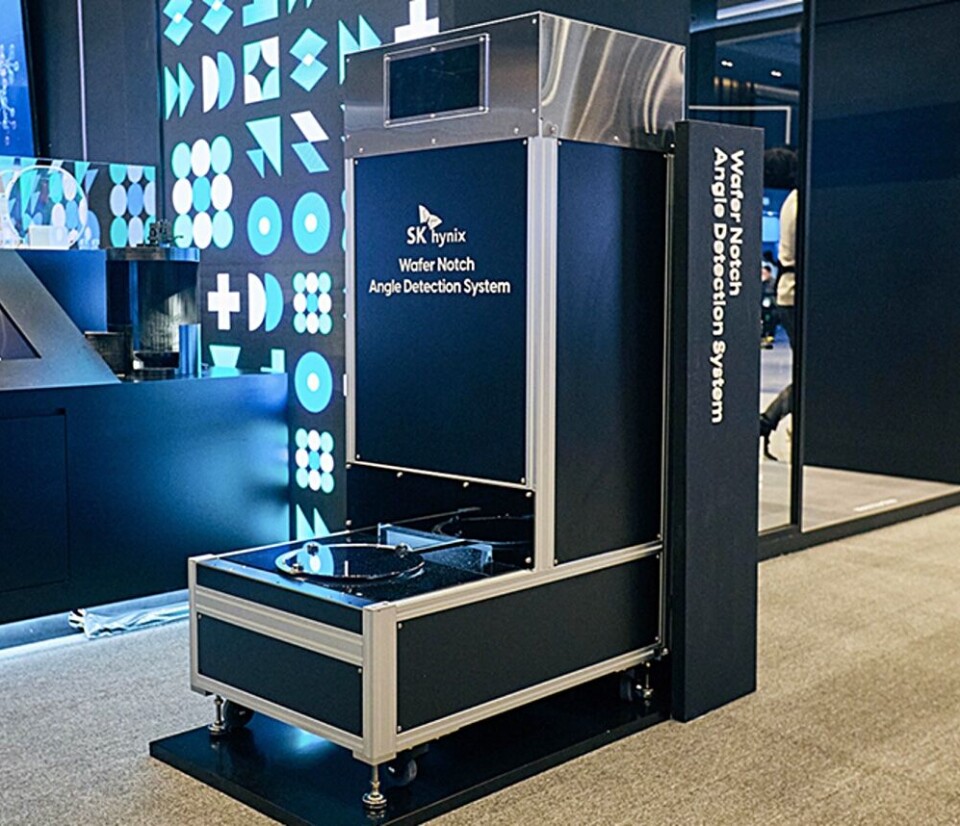
Much earlier, in 2020, it stated: “we have focused on developing and distributing algorithms to apply analytical functions to production lines, thereby building a system that solves operational issues. Among these, the product-oriented development work includes one task on image-based defect detection and classification—Intelligent Visual Inspection Analytics 4 (Intelligent Visual Inspection Analytics, IVIA).”
It said: "IVIA has carried out two years of visual defect detection automation since 2018. Through this project, the company developed an artificial intelligence model for early detection of defects and classification, and implemented a Minimum Viable Product (MVP)."
SK Hynix also has a strategy of becoming a full-stack AI business, and is setting up AI Co in the USA; a business entity with a notional $10 billion in funding, that will “play a pivotal role in delivering optimized AI systems for its customers in the AI datacenter sector. The company will also continue making strategic investments in, and collaborating with, AI firms to strengthen its competitiveness in memory chips and provide a range of AI datacenter solutions.”
BANDF AD
AI Co will own Solidigm, which will, it said, provide “the anchor asset of this new $10 billion investment and will play into the AI infrastructure solutions they’ll provide.”
Against this background we think it’s possible we may see a role for Solidigm’s Luceta product as part of the overall SK Hynix up-stack AI push. We have asked both SK Hynix and Solidigm if this is the case.