BANDF AD
DISK
Seagate HAMRs out production deal for 44TB Mozaic4+ drives with hyperscaler
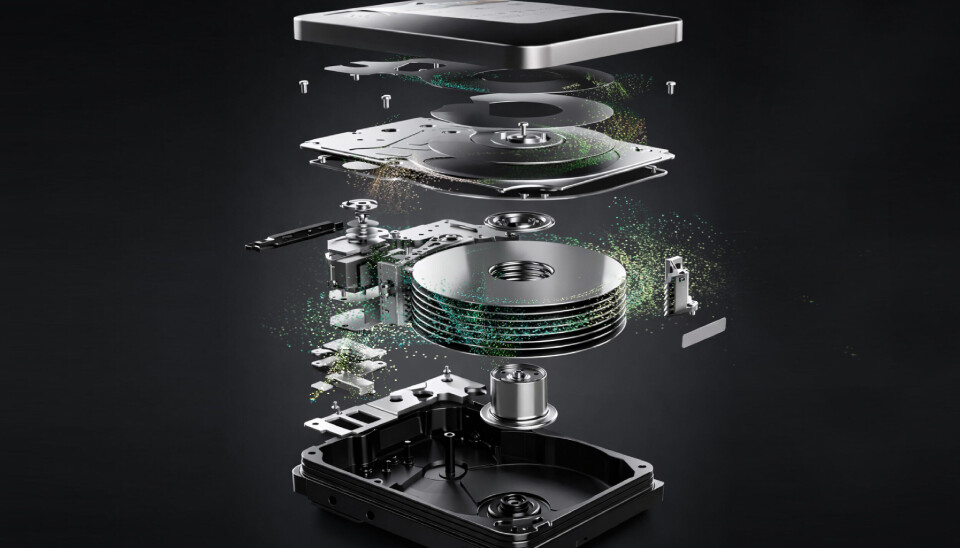
Seagate’s HAMR-based Mozaic 4+ drives have been qualified and put into production at least one leading hyperscaler, the storage vendor has revealed.
Seagate said the qualification supports capacities up to 44TB, and reflects production-scale deployment in hyperscale environments. Further customer qualifications are underway, Seagate said.
BANDF AD
In fact, while the company’s initial statement said it was in production at one hyperscale, in a briefing call, the vendor's CEO, Dave Mosley, said two hyperscalers were in production with the technology.
The vendor said its roadmap for the ten platter parts will scale from today’s 4TB plus per disk to 10TB per disk, leading to 100TB units. This would allow customers to boost capacity without “disruptive architectural shifts.”
Mosley said hyperscalers’ qualification of the drives was a major vote of confidence in the platform, as “they make infrastructure decisions based on five, seven, even 10 year time horizons.”
Currently, Western Digital’s disk drive range is on target to hit 40TB this year with a 44TB HAMR device coming hard on its heels.
BANDF AD
Seagate did not specify exactly what applications or data the HAMR-based devices were being used to support, but said the deal showed how its technology “supports economic viability of AI-scale data growth.”
Seagate’s role in supporting that “AI-scale data growth” has received a boost from the fact that the furious pace of datacentre growth means SSD manufacturers are stretched to the limit, driving up prices.
Together with HDDs' suitability for certain data types and applications, such as video or massive data lakes, this had made more traditional spinning rust storage more attractive that it might have been a couple of years ago.
Last year, Seagate CTO John Morris told B&F that HDDs enjoyed a a five and 10 to one cost advantage byte for byte over SSD and this was unlikely to change over the next decade.
BANDF AD
“It’s just a question of economics, providing you know that exabyte scale data lake requires the superior economics of disk drives to make it work.”
Seagate is also playing the energy efficiency card – always a winner with hyperscalers and other datacenter operators who are facing increasing problems getting access to power.
BS Teh, Seagate's chief commercial officer, said the shift in focus from the number of drives to the number of exabytes they house was significant. Reducing the number of drives had knock on effects around power, cooling, and embodied carbon.
According to Seagate, in a one-exabyte deployment, Mozaic improves infrastructure efficiency by approximately 47 percent compared to standard 30TB deployments.
This in turn reduces the required footprint by about 100 square feet and lowers annual energy consumption by roughly 0.8 million kilowatt-hours. “At AI scale, these efficiencies compound into meaningful economic advantage,” it claims.
In January, the vendor turned in its highest profits for six years – at $702 million - and highest free cash flow in eight.
Those figures showed that nearline EB (Exabyte) capacity is on allocation through calendar 2026, with long-term agreements in place with major cloud customers through calendar 2027, with multiple CSPs discussing demand projections for calendar 2028.
At the time, the company said that Mozaic 4+ qualifications were underway with multiple customers, with an initial volume ramp set for Q2.